
Investing in retrofits is no longer an “if” – here’s the “how”


A "one-stop shop" approach can get retrofit projects off the ground fast.
After decades of demonstrating the benefits of energy efficiency retrofits in buildings, we are seeing unprecedented support across government, industry, and advocates for scaled up investment. Many experts are recommending that the federal government include retrofits in a post-pandemic stimulus package. And these recommendations are resonating because they boast powerful job creation numbers and significant additional public benefits. For example, the $1.7 billion allocated to clean up orphan oil wells (an initiative we support) is expected to create 10,000 job-years; based on these numbers, we’ve calculated the same investment in energy efficiency would directly and indirectly create at least three times more.
If it’s that easy, why aren’t building retrofits trending already?
There’s a service gap
We know from our direct experience that not many building owners and managers have the capacity to plan and undertake a deep energy retrofit project independently, even when funding exists. Taking a deep retrofit from start to finish involves financial, technical, and operational complexity, and has a high degree of perceived risk. In addition, workforce capacity, experience, and access to innovative technology is limited.
There’s a funding gap
Despite the promise of returns, institutional investors require minimum transaction sizes that today’s disaggregated retrofit projects can’t meet. Also, conventional ROI does not calculate the full payback. The International Energy Agency estimates that up to 75% of the total value created are public benefits that are not monetizable for building owners.
That’s why public funds are needed: the most successful deep retrofit programs around the world stack public grant funding with private financing options. Public and private resources should work in concert to create value in both spheres, such as:
Public Benefits
✓ Building resilience
✓ Carbon reductions
✓ Green jobs
✓ Health benefits
✓ Avoided energy systems costs
Private Benefits
✓ Asset value
✓ Utility cost savings
✓ Avoided repairs and maintenance costs
Government can send the signal
In the context of a green recovery, the federal government has an incredible opportunity to spark and accelerate the Canadian retrofit economy at full scale. Through amped-up and collaborative funding programs, clear performance benchmarks, and a long-term roadmap to complete deep retrofits for all of Canada’s homes and buildings, the federal government can address both the service and funding gaps, as well as climate goals. The participation of provincial and municipal governments to reduce red tape will enable faster, more predictable project timelines and greater resource efficiency.
The building sector needs a one-stop shop
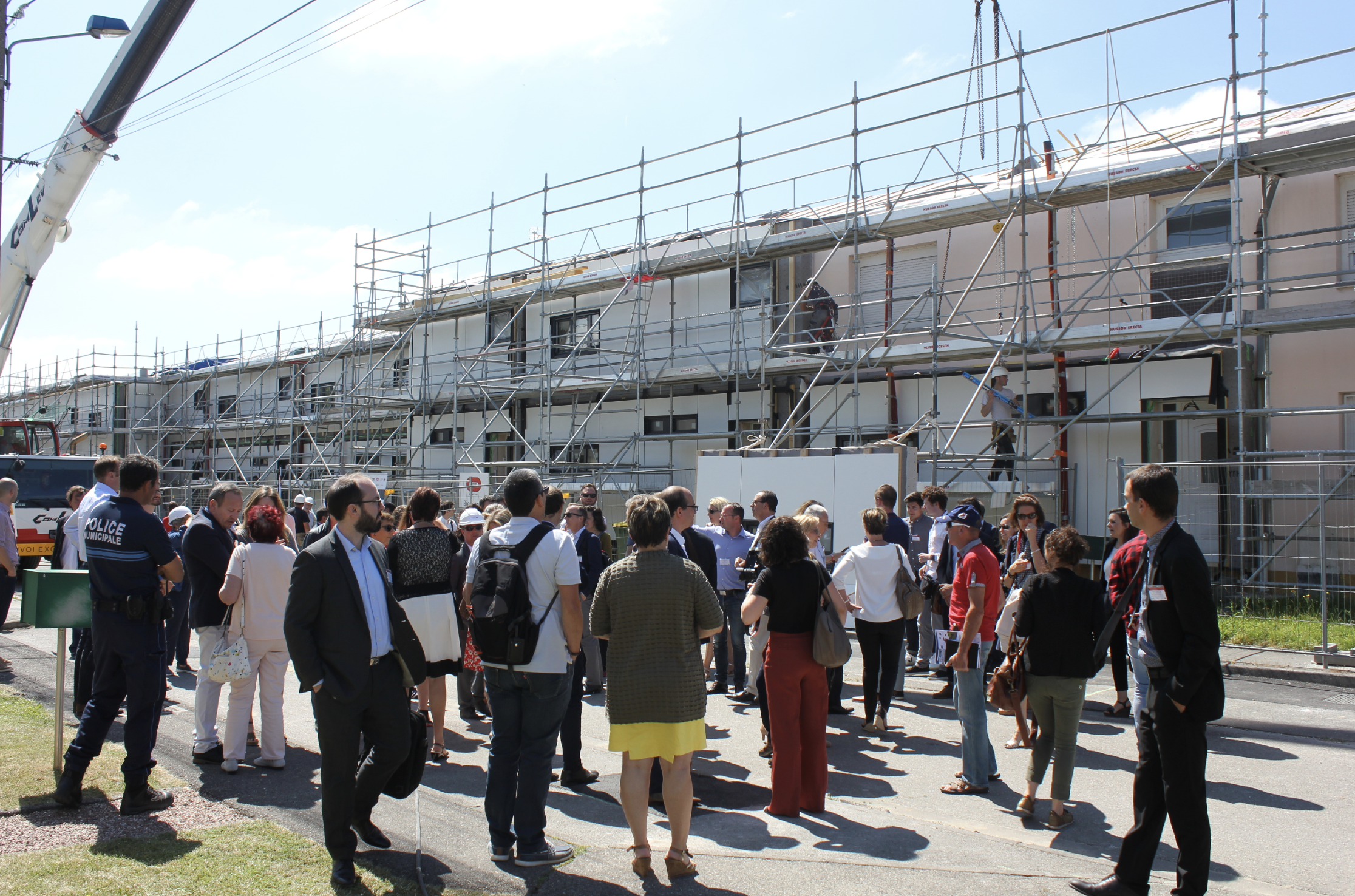
Despite the potential for retrofits to be a powerful part of Canada’s economic recovery agenda, we will continue to come up against the same roadblocks to getting projects done. The building sector needs a one-stop shop. As a result of the COVID-19 crisis we are seeking stimulus solutions that are fast, predictable and reliable, but also bold on climate goals and which improve peoples’ well-being. With dedicated guidance and funding, this one is ready for prime time.
8 comments
Leave a Reply

Expanding property assessed financing to meet the needs of Ontario building owners
Opinionssss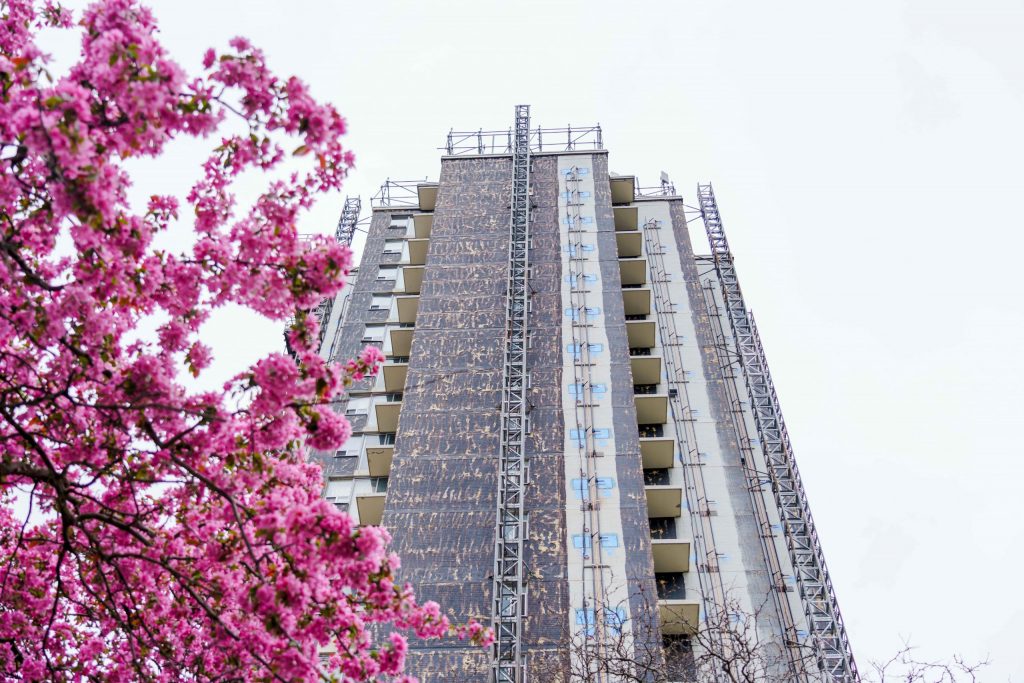
Deep Retrofit Diary: Tower transformation from 1967 to net zero
Opinionssss
Vancouver and NYC expose the false climate-affordability tradeoff
Opinionssss
Industrialized construction 101
Opinionssss
Guide to the Environmental Registry of Ontario for Bill 98
Opinionssss
Ontario’s Bill 98 undermines energy affordability and independence
Media Releases
Retrofit financing exists — now we need policy, too
Opinionssss

The economic “job-year” reference used to compare orphaned “oil wells” is a perfect reason why the government stimulus should also be channeled to building retrofits. Thank you, TAF for documenting and advocating this!
Totally agree.
We’d all benefit from a deep energy retrofit program on this scale.
And a one-stop shop fills the how-to gap that has been holding us back.
Hello Julia:
This is right on the money.
A badly needed and largely untapped resource, a truly deep, deep and wide national concerted effort over this decade to get our country’s existing building stock’s energy consumption down would check off a number of boxes from the to-do list (employ people, lower carbon, increase resilience, etc.). The current covid-19 crisis could present us with a once-in-a-generation opportunity to accomplish this goal.
Great article.
The Beach Community Energy Cooperative (BCEC) has many east end members who have faced the “deep retrofit’ challenge and backed away. There is a clear need for financing packages and organizational support and fear about what lurks “behind the wall” in older energy inefficient buildings.
Let’s give this issue the same attention and support as the oil/gas industry has traditionally had and much more deep retrofits will be done at the local community level. The drop in carbon emissions will be a wonderful thing too.
The best phrase is: “Do It and support our ecosystem”
Bob
Thank you for summarizing as you have. A great article to reference and share.
A very well written and well timed piece. You capture the broad benefits of such an approach including perhaps the most significant ones at this moment in time being jobs as well as emission reductions. Given the extended period of low interest rates that lies ahead and inherent savings to home and building owners, now is the time.
I very much share this perspective in believing that the best approach would be to identify leadership and get organized within the retrofit and financial sectors by building a broad consortium at the provincial level across Canada to bring turnkey solutions to the federal government. The situation varies significantly across provinces based on the electricity supply mix and heating sources along with different cost structures and emission factors. As well, each province has a very different history with regards to delivering energy efficiency and renewable energy programs that needs to be reflected in the overall approach.
As you note, the consortium needs to be broad and encompass all the actors along the retrofit value chain from auditors through contractors along with grant providers and financiers in addition to municipal support for any PACE financing that can address barriers to building owners undertaking deeper retrofits with longer payback periods but the potential for greater savings and emission reductions. Building trust and transparency along the value-chain will also be key to driving take-up.
Well done and appreciate TAF’s leadership.
Great article, this will allow us to come out with substantial changes to improve climate change modifications after Covid 19.
You couldn’t be more correct or on target. Thank you! A substantial percentage of the ‘built environment’ that will still exist in 2050 or later is with us now, and most of it is energy hogs. How to build new buildings that use zero net energy or even generate more than they use is rapidly becoming common knowledge. All new buildings really need to comply with this standard — now! (But we don’t require that yet.)
It’s the existing buildings that are and will remain the problem. Unless we ramp up substantial efforts to change that ‘paradigm’ we will never solve the climate crisis. I’m an old green building and energy bozo from way back. I’ve been working hard to promote a total energy retrofit for my own small condo building in Ottawa (32 units, 44 year-old 8-storey concrete frame building). Tackling this project has been a major learning experience. The technology is not the problem. It seldom is. The major roadblocks are sources of funding, and our owners perception and fear of massive risks. The latter is a result of the former IMHO. I’m confident that we can finance 75% of our major retrofit from savings in utility costs plus appropriate offsets from the reserve fund. But we need to find the missing portion, and increases in condo fees or a special assessment are not options — our owners are totally tapped out with ‘essential’ things like roofs and elevators and garage roof and balcony repairs.
Something that would really help calm the fears of our owners are examples of successes from all over Canada. But these are hard to come by for the reasons you so accurately cite.
We are far from being alone in this situation, and this is the largest roadblock to major progress in the existing building sector. The funding available under Ontario’s former cap-and-trade program would have made our proposal a slam-dunk. It needs to be put back in place, and is among the most appropriate solutions; another is a carbon tax. Let the polluters pay!
If rational funding options were available, I’m confident that retrofitting existing buildings would become a massive and important new market opportunity. And market-driven solutions are – in the end – the only realistic ones; ones with enough critical mass to ‘move the needle’. Without rational funding options, the market will never get off the ground. Even environmentally motivated engineers and architects and builders today look at the seemingly overwhelming opportunities and shake their heads when they get to the financing conundrum — as do the building owners themselves.
Here’s a very sincere thank you for the massively important role you are playing in changing this ‘paradigm’.