Just launched: Carbon Emissions Inventory 2024

From less bad to more good: the low-carbon city of the future

How can we bring optimism and engagement to bear in creating the low-carbon city of the future? John Robinson offered some insightful answers to these questions this week’s 2016 Eric Krause Memorial Lecture at the University of Toronto. Professor Robinson recently came to Toronto from BC, where he played a key role in supporting sustainability […]

Let’s get it right – Ontario’s energy reporting and benchmarking policy

The Ontario government is proving its commitment to large building energy reporting and benchmarking.  Following closely on the heels of the enabling legislation, the Ontario government has proposed draft regulations for its province-wide large building energy and water benchmarking and reporting (EWRB) policy.  TAF is proud to have contributed to the evolution of EWRB at […]

TEA shares 7 best practices for climate engagement

Guest blog post by Dusha Sritharan, Campaigner, Toronto Environmental Alliance     Without public support, green policies aren’t worth the paper they’re written on. In recent years, a number of low carbon policies have been eroded because they’ve lacked strong public support. For example, the Transit City Plan was scrapped when policy-makers failed to communicate the benefits of […]

ABCs of counting GHGs: Net zero buildings

When you’re in the business of carbon reduction, how do you come up with the data to account for the actual amount of emissions released into or reduced from the atmosphere?  TAF follows a complex greenhouse gas (GHG) quantification process every time we evaluate an opportunity to fund or finance a project or pursue a […]

Energy Benchmarking & Reporting: TAF presents to Ontario Standing Committee

TAF has supported energy benchmarking as a best practice in the real estate industry for about 10 years. As part of the Building Value project, TAF conducted extensive research and consultation to explore the potential benefits of a municipal or province-wide benchmarking policy. TAF’s Director of Policy & Programs Bryan Purcell testified in front of the Ontario Legislative Assembly’s Standing Committee on General Government in favour of this policy tool.

Survey shows barriers to energy efficiency in Canada

Energy-use in Canada’s buildings sector has grown by 19 per cents since 1990, and currently accounts for about 120 million tonnes of CO2eq emissions annually. According to the latest Evaluation Report (June 2015) of the Office of Energy Efficiency, building sector energy consumption is expected to continue increasing through 2020 and “there is an ongoing need […]

Energy efficiency: Top three policy ideas to reach federal climate targets

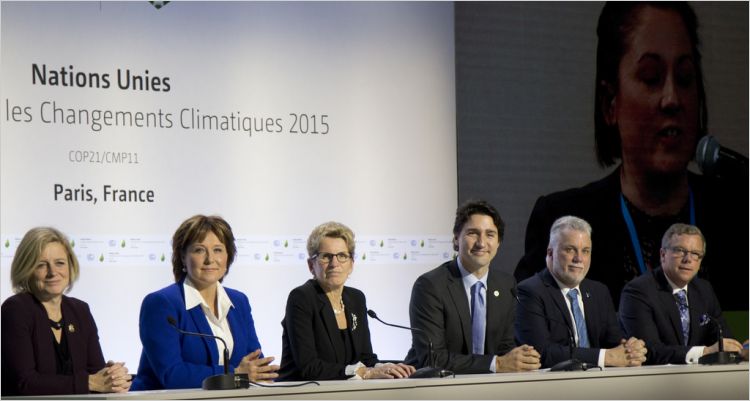
With the federal government promising to hold a first ministers conference 90 days after COP21 to develop a national climate strategy, it is now more imperative than ever to critically assess major sources of GHG emissions and opportunities for substantial emissions reductions. To better understand how the Trudeau government can make the most of energy efficiency policy, TAF’s Building […]

New report steers the low-carbon obstacle course for cities

Amidst the climate information overload driven out of the Paris conference, a fantastic research report was released to guide the way for city climate action over the next five years. Prepared by C40 and global consulting firm Arup, the report Potential for Climate Action considers actions cities need to take to significantly reduce carbon emissions, with […]

Cap and trade an important signal – but needs stricter allowances

The release of Ontario’s Cap and Trade Design Options is sending a powerful signal about the government’s commitment to climate action. Last week, Ontario’s Ministry of the Environment and Climate Change (MOECC) consulted stakeholders on its proposed approach for carbon pricing in Ontario  including linking with Quebec and California, timing, program scope, and the use of offset credits. What […]

Trudeau’s climate platform: 6 promises we’re watching

For the 27 million Canadians living in cities, it’s notable that the new Liberal government has made some important commitments to urban sustainability. The Party’s on-line election platform has an overwhelming raft of content, So we’ve put together a summary of the key elements that focus on climate change, cities, and the low-carbon economy. We hope this record of the tangible commitments made during the election can act as a reference point for measuring this government’s progress over time.

Get the latest news, views, & research about creating a net zero GTHA in your inbox monthly.