
Four ways the federal budget should boost the retrofit market
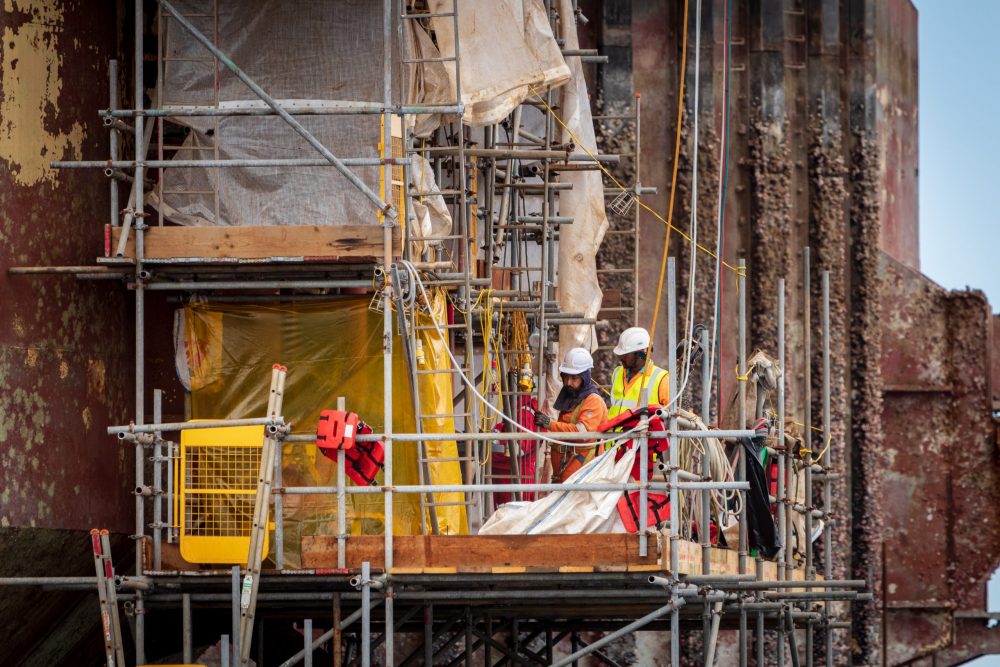

With Canada’s 2021 budget just around the corner, cue TAF’s refrain that investment in deep retrofits will hit the mark local job creation, carbon reduction, and numerous positive social outcomes.
With vaccine deliveries ramping up, we can begin to imagine a life after the COVID pandemic. In addition to the incalculable human toll, the pandemic has inflicted enormous economic damage. The federal government has announced plans to invest an estimated $70-100 billion in stimulus spending over three years, with a major focus on climate action. We applaud this direction, but with hint of caution: with billions of climate stimulus dollars on the table, it is easy to lose sight of the hard work needed on the ground to implement and scale climate action. For example, energy retrofit programs require home and building owners who are ready and able to manage a complex deep retrofit project, and designers and constructors ready to implement with excellence at scale.
With Canada’s 2021 budget just around the corner, cue TAF’s refrain that investment in deep retrofits for homes and buildings will hit the mark on local job creation, carbon reduction, and numerous positive social outcomes. Our message is shared by advocates and leading industry experts across the country, and it appears the government is paying attention. Environment and Climate Change Canada has already announced a $15 billion climate plan, including $6.1 billion in funding for to make retrofits more affordable for home and building owners. This, combined with the climate plan’s increase in carbon price bodes well for enabling more rapid undertaking of retrofits in Canada, but alone it is not enough. Funding must be specifically for deep retrofits, and must include complimentary funding for retrofit market development: activities which ensure we have the workforce, market demand, quality of service and process standardization to yield the economic, social and environmental outcomes retrofits offer.
In alignment with the Task Force for Resilient Recovery recommendations, we propose specific actions to ensure these vital programs are shaped to ensure they deliver carbon reductions, as well as health, affordability, and fairness for residents and homeowners.
TAF’s 2021 budget submission recommends that the federal government:
- Invest at least $55.4 billion over five years in climate-focused clean stimulus measures, including at least $27 billion in climate resilient and energy efficient buildings.
- Create a funding program of at least $2 billion over 5 years to support deep retrofits that maximize carbon reduction and community benefits.
- Create a funding program of at least $100 million over 5 years for initiatives that help create a well-functioning deep retrofit market, including innovative and scalable approaches to project origination, aggregation, standardization, and cost compression.
- Create a funding program of at least $30 million over 5 years for research, development, demonstration, and deployment of low carbon equipment in the building sector, with a focus on the priorities laid out in the Federal, Provincial, Territorial government’s joint Market Transformation Roadmap.
Retrofit funding is widely acknowledged as one of best ways to create jobs, creating an estimated 23 job-years per $1 million invested. But activity today is focused on shallow retrofits – not enough to meet Canada’s net-zero emissions goal. We must rapidly develop and transition the building industry to focus on deep retrofits (targeting greater than 40% carbon reduction) to hit our climate commitments. Based on a decade of experience demonstrating this type of retrofit, from installing electric heat pumps to replacing toilets and smart thermostats, we know building owners and operators need significant support. A fundamental part of TAF’s vision for a robust retrofit sector in Canada includes comprehensive service delivery in partnership with governments and building owners.
Signals from our partners in local government, housing providers, construction trades, and private investors tell us that a broad spectrum of the market is ready to roll up their sleeves. We urge the federal government to engage in thorough consultation with these market players and follow through with significant retrofit funding and program design in the 2021 budget.
For details, read TAF’s 2021 Federal Budget Recommendations.
3 comments
Leave a Reply

Expanding property assessed financing to meet the needs of Ontario building owners
Opinionssss
Canada’s EV transition is held up in our parking garages
Opinionssss
Deep Retrofit Diary: Tower transformation from 1967 to net zero
Opinionssss
Vancouver and NYC expose the false climate-affordability tradeoff
Opinionssss
Industrialized construction 101
Opinionssss
Guide to the Environmental Registry of Ontario for Bill 98
Opinionssss
Ontario’s Bill 98 undermines energy affordability and independence
Media Releases

For the last 10 years we have been trying to convey several messages to both the Provincial and Federal Governments regarding the Canadian CleanTech Industry, so much so that we were asked to write Papers with our recommendations for several Provincial Ministries, which we did and submitted. The purpose was to de-couple decision making making from the Civil servants who do not know nor understand the issues and transfer it to organizations that are in deep in CleanTech.
The focus was to allow us to stop going after the low hanging fruit such as lighting ( changing light bulbs) and concentrate on the big, heavy energy users. Deeper retrofits and sound designs at the Design Build stages of a building of factory. While everybody is focusing on the Commercial, Institutional, Municipal and MURB sector (a sector we do very well in) the main culprit, the Industrial sector, is being neglected because it is a very difficult area to penetrate and make an impact. Here again, we did extremely well, but we are one of very few companies that have managed to put a tiny dent in this 1,000 pound energy-sucking gorilla.
The tendency of many large Canadian organizations ( City Of Mississauga, Peel County, U of T and others) to buy and use US-made products such as submeters instead of Canadian, Made in Ontario products, is very frustrating because Canada is one of the leading technology leaders in this foiled, Z3 Controls being one of them. This was also conveyed to Minister Vic Fedeli who acknowledged the problem.
There are other areas that we can impact and help move the Canadian CleanTech ball forward that are not rocket science and have been proven time and time again.